For the food, beverage, and agricultural industries in California, water is the foundation of production. But with the formal launch of the California Water Plan 2028, the state has signaled a massive shift in how water will be managed, allocated, and regulated in the coming decades.
Governor Gavin Newsom recently announced the initiation of this multi-year effort, driven by Senate Bill 72 (SB 72). The plan’s centerpiece is a staggering mandate: California must find a statewide water supply target of 9 million acre-feet by 2040 to offset the losses caused by shrinking snowpacks and intensifying droughts.
What does a 9-million acre-foot deficit mean for your winery or processing facility? It means the era of cheap, easily accessible water and lenient disposal regulations is coming to an end.
The Changing Hydrology: Extreme Swings, Tighter Restrictions
The state is no longer planning for temporary droughts; it is adapting to a permanent change in hydrology. As Department of Water Resources (DWR) Director Karla Nemeth noted, California is now experiencing “extreme wet swings to intensely dry within the same season.”
To meet the ambitious targets of SB 72, the state will be implementing measurable water supply targets and stricter accountability benchmarks. For industrial and agricultural water users, this top-down pressure will inevitably translate to:
-
Stricter Permitting: Approvals for new wells are already incredibly difficult in regions like Sonoma County; this legislation will likely tighten regional allowances further.
-
Increased Disposal Surcharges: As municipalities are forced to conserve and manage water more aggressively, the cost of discharging wastewater into municipal systems will rise.
-
Production Caps: Facilities that rely heavily on municipal water supplies or vulnerable groundwater may face usage caps during dry years, directly threatening growth and production volumes.
The Solution: Decoupling from the Grid with Advanced Water Recovery
You cannot control state mandates or the climate, but you can control your facility’s water loop. The most effective way to insulate your business from the impacts of the 2028 Water Plan is to treat your wastewater as a recoverable asset rather than a liability.
At Recovered Water Solutions, we specialize in helping facilities adapt to these exact regulatory pressures. By implementing targeted, skid-mounted filtration technologies, we help wineries and agricultural processors reclaim and reuse their water on-site.
-
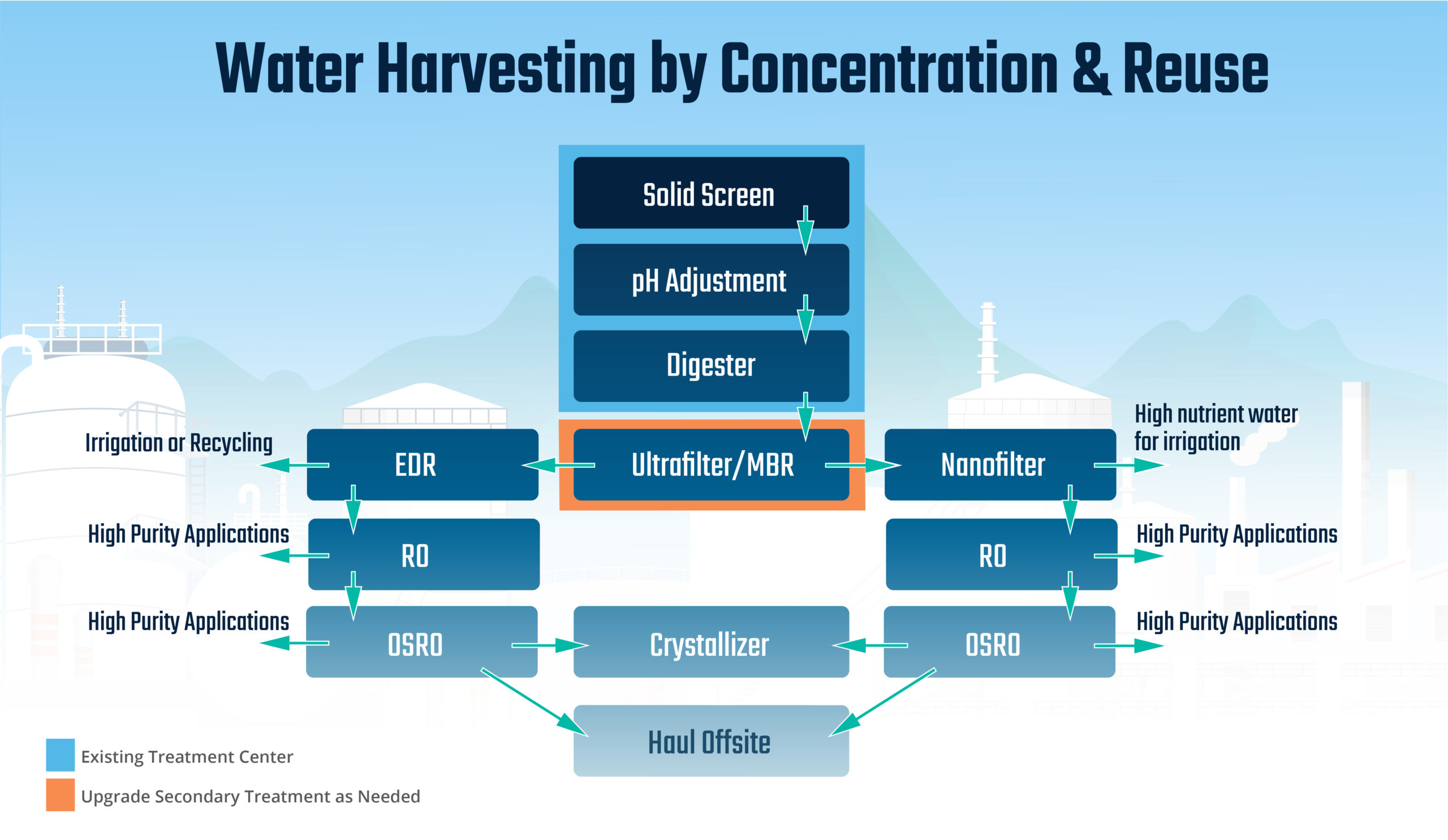
Membrane Filtration & Reverse Osmosis: We utilize staged filtration, including nanofiltration and reverse osmosis, to refine wastewater into a clean, recoverable product that can be safely reused in your facility.
-
Zero Liquid Discharge (ZLD): For facilities facing the strictest disposal regulations or lack of land for wastewater ponds, we design systems capable of eliminating liquid waste entirely, utilizing crystallization and advanced membrane technologies.
-
Customized Resource Recovery Units: Every facility’s feed water is unique. We design combinations of electrodialysis, de-ionization, and membrane softening to fit your specific process, ensuring optimal recovery without disrupting your operations.
Secure Your Water Future Today
The regulatory framework of the California Water Plan 2028 is being built right now. Facilities that wait until the benchmarks are enforced will find themselves scrambling to comply.
The smartest move you can make today is to understand exactly where your vulnerabilities lie. Recovered Water Solutions offers a comprehensive Water Risk Assessment, including an on-site engineering review of your current water usage and wastewater systems. We will provide you with a customized Water Recovery Plan—complete with equipment recommendations, treatment trials, and cost engineering—to guarantee your water security through 2040 and beyond.
Staying Compliant with the California Water Plan 2028.
Click Here to Start Your Risk Assessment Now and Protect Your Operation.